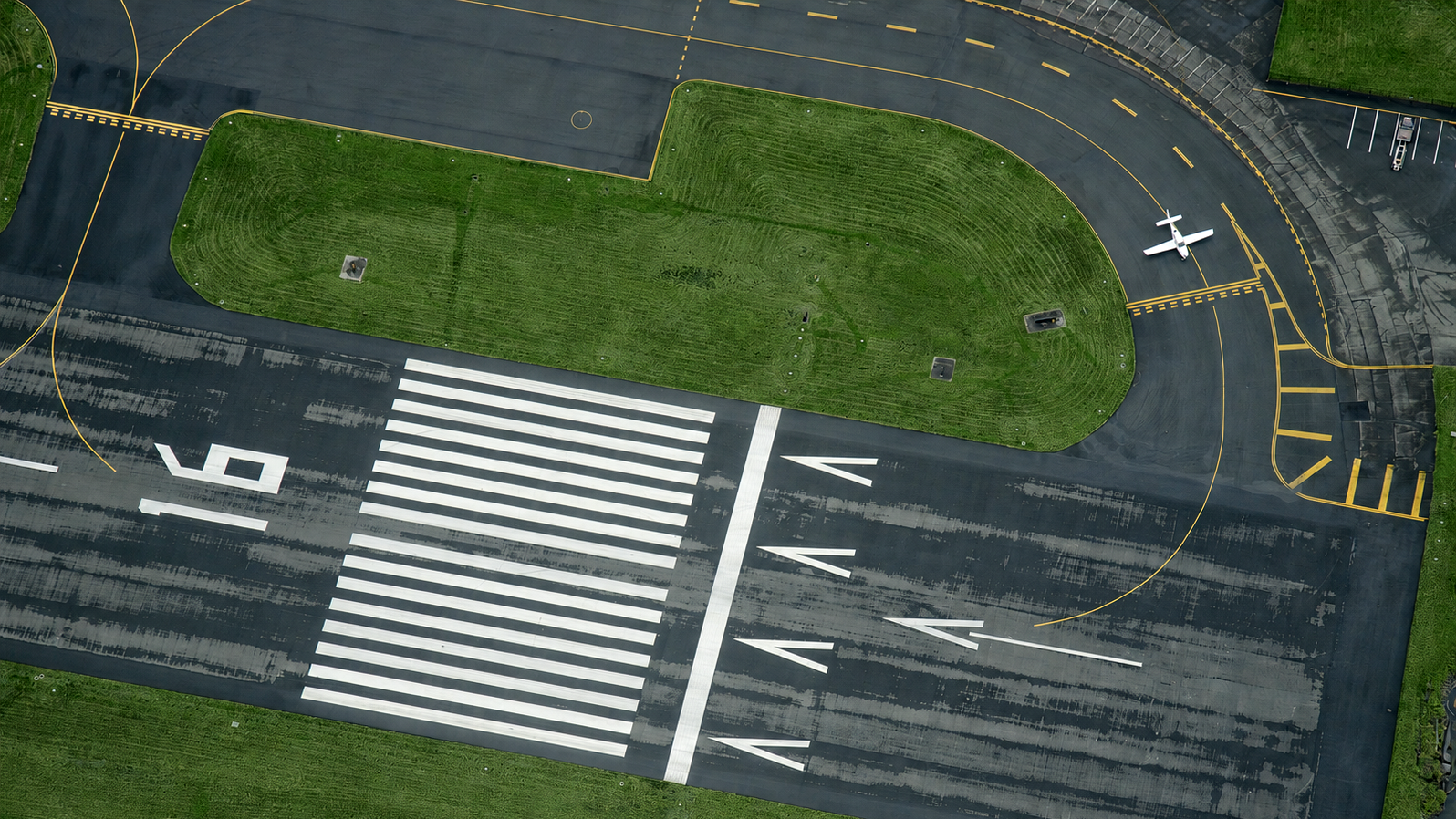
But I believe the next significant step in runway safety will come from something different. It will come from making that infrastructure more responsive to what is actually happening operationally, and eventually more intelligent in how it supports the people running the airfield.
This is what I mean by the cognitive runway.
The Evolution of Runway Infrastructure
An Airfield Lighting Control and Monitoring System (ALCMS) is a good place to start. Its role is fundamental: giving airports control and visibility over their airfield ground lighting infrastructure. Operators can manage the lighting environment, monitor its status and understand when something is not performing as expected.
That capability has developed enormously, but fundamentally we are still talking about control and monitoring. The airport tells the infrastructure what to do and the infrastructure tells the airport how it is performing.
The next step is making that relationship more dynamic.
Aligning Technology with Real-Time Operations
With Adaptive Dynamic Airfield Lighting (ADAL), we can start using the lighting infrastructure differently. Instead of thinking about airfield lighting simply as a fixed configuration that is switched or adjusted according to predefined operating conditions, lighting can become much more closely aligned with the operation taking place at that moment.
That matters because a pilot does not need every piece of information available on the airfield. The pilot needs the right guidance for the movement being performed. If lighting can respond dynamically to operational requirements, it becomes more than infrastructure. It becomes an active part of how we guide aircraft safely and efficiently around the airfield.
For me, that is already an important change in thinking. ALCMS gives us the ability to control and monitor the lighting environment. ADAL allows us to make that environment adaptive.
But there is another step.
Airports generate huge amounts of information about their infrastructure and operations. The challenge increasingly isn't whether the data exists. It is understanding what matters, what is changing, and where somebody needs to pay attention.
Turning Data Into Operational Insight
This is where AI: Airside Intelligence becomes relevant.
I don't see AI replacing the controller, airfield operator or maintenance engineer. In aviation, that is neither a realistic nor particularly useful way of looking at the technology. The more interesting opportunity is using intelligence to help experienced people understand the operational context behind the information their systems are already producing.
Take something as simple as an ALCMS alarm. Knowing that an asset has changed state is useful. But the operational significance of that event can vary enormously. What is the current configuration? What other assets are affected? Is this an isolated event or part of a developing pattern? Has something similar happened before? Does it require immediate intervention, or can it be managed without affecting the operation?
Today, answering those questions can require people to look across different information, apply their own experience and decide what matters. Airside Intelligence can help with that process: finding patterns, bringing relevant information together and helping teams focus on what actually requires attention.
This is where the idea of the cognitive runway starts to become much more interesting.
The progression is not about replacing one generation of technology with another. ALCMS remains the foundation for controlling and monitoring the lighting environment. ADAL makes that environment more responsive to operational needs. Airside Intelligence adds the ability to interpret information and provide context around what is happening.
Control. Adaptation. Intelligence.
Together, these capabilities can begin to change our relationship with airfield infrastructure. Instead of simply asking, Is the system working? we can start asking better questions:
- What is happening?
- What does it mean operationally?
- Is something changing?
- Where should we focus our attention?
That becomes particularly valuable as airports become busier. More traffic does not simply mean more aircraft. It means more pressure on infrastructure, maintenance teams and operational decision-making. Adding more information to that environment is not necessarily helpful. In fact, at some point it becomes another source of workload.
The technology has to do more of the work of turning data into something people can use.
This is why I don't think the future runway will be defined by how many digital systems an airport has. It will be defined by how effectively those systems work together to support the operation.
Nor do I think we should describe the destination as an autonomous runway. Safety-critical decisions will continue to depend on trained people, established procedures and operational discipline. The purpose of intelligence is to make those people better informed, not to remove them from the process.
A cognitive runway is therefore not a runway that somehow “thinks” for itself. It is an operating environment that becomes progressively better at understanding its own condition, adapting to operational requirements and helping people recognize what matters before it becomes a problem.
We already have many of the building blocks. The next challenge is connecting them in a way that creates genuine operational value.
For me, that is where runway technology is heading: from control, to adaptation, to intelligence — and ultimately to better decisions.
▶ Download Airport Guide to Runway Safety Technologies
Your essential resource for understanding and implementing the latest in runway safety technology.